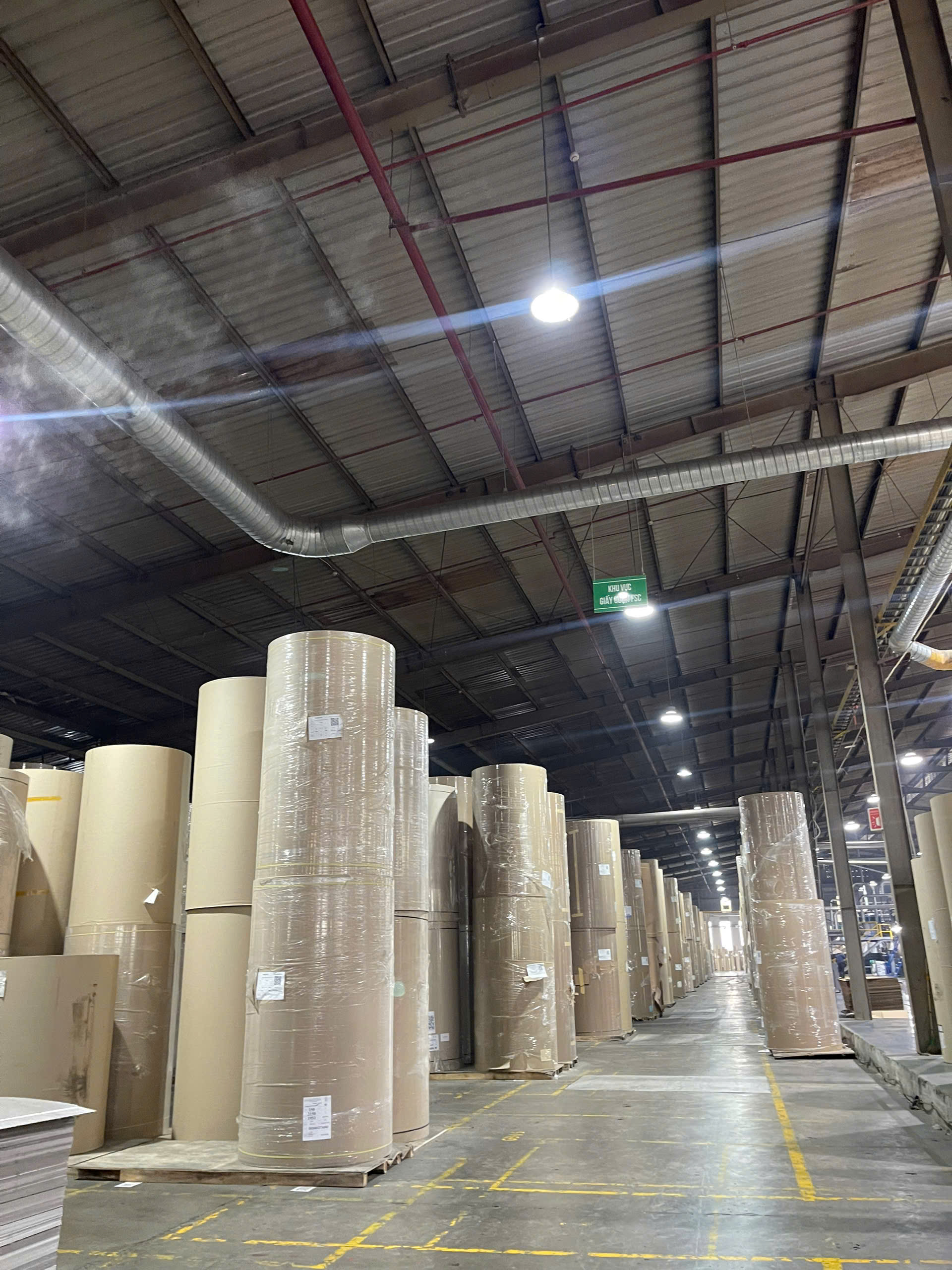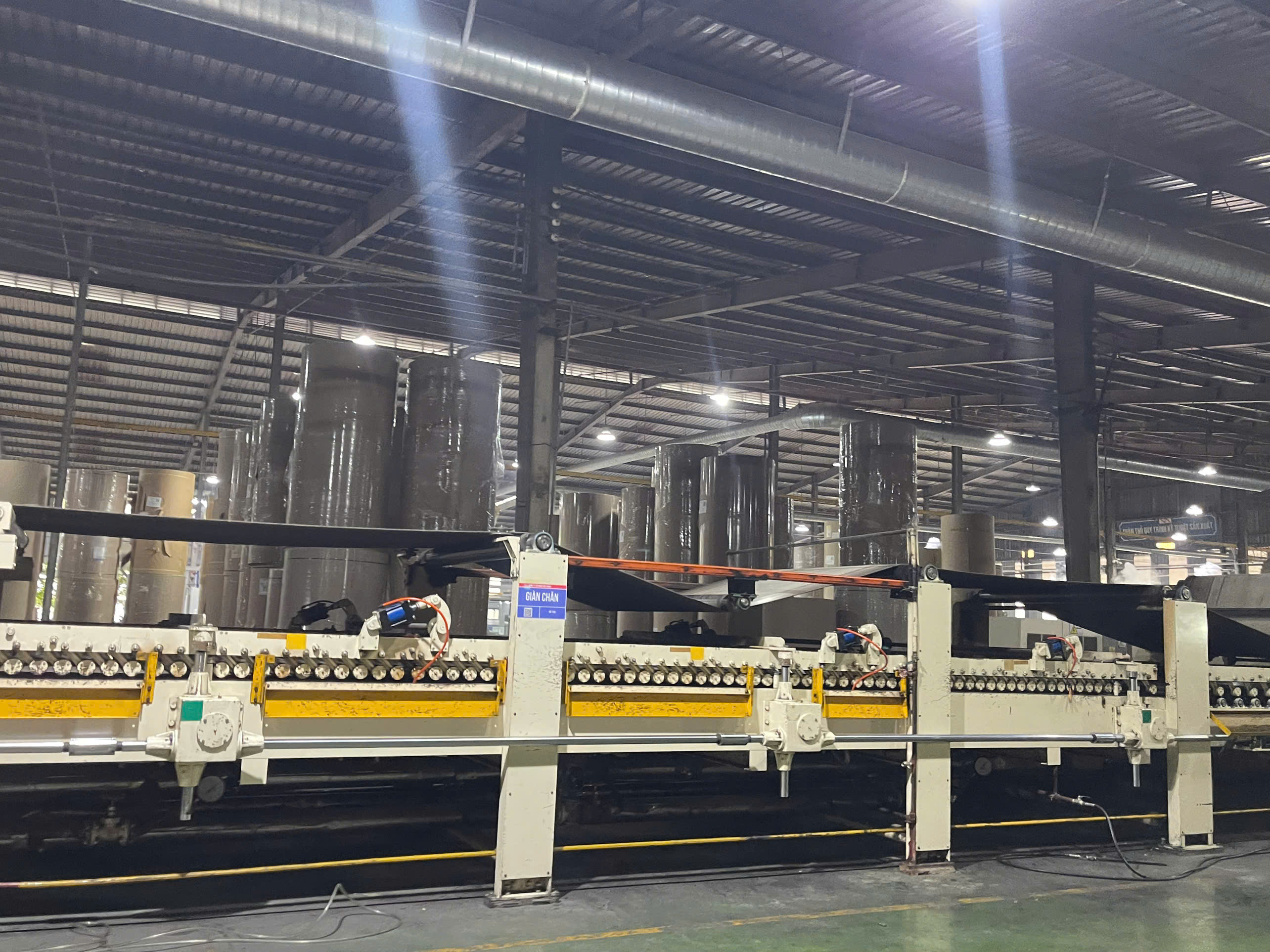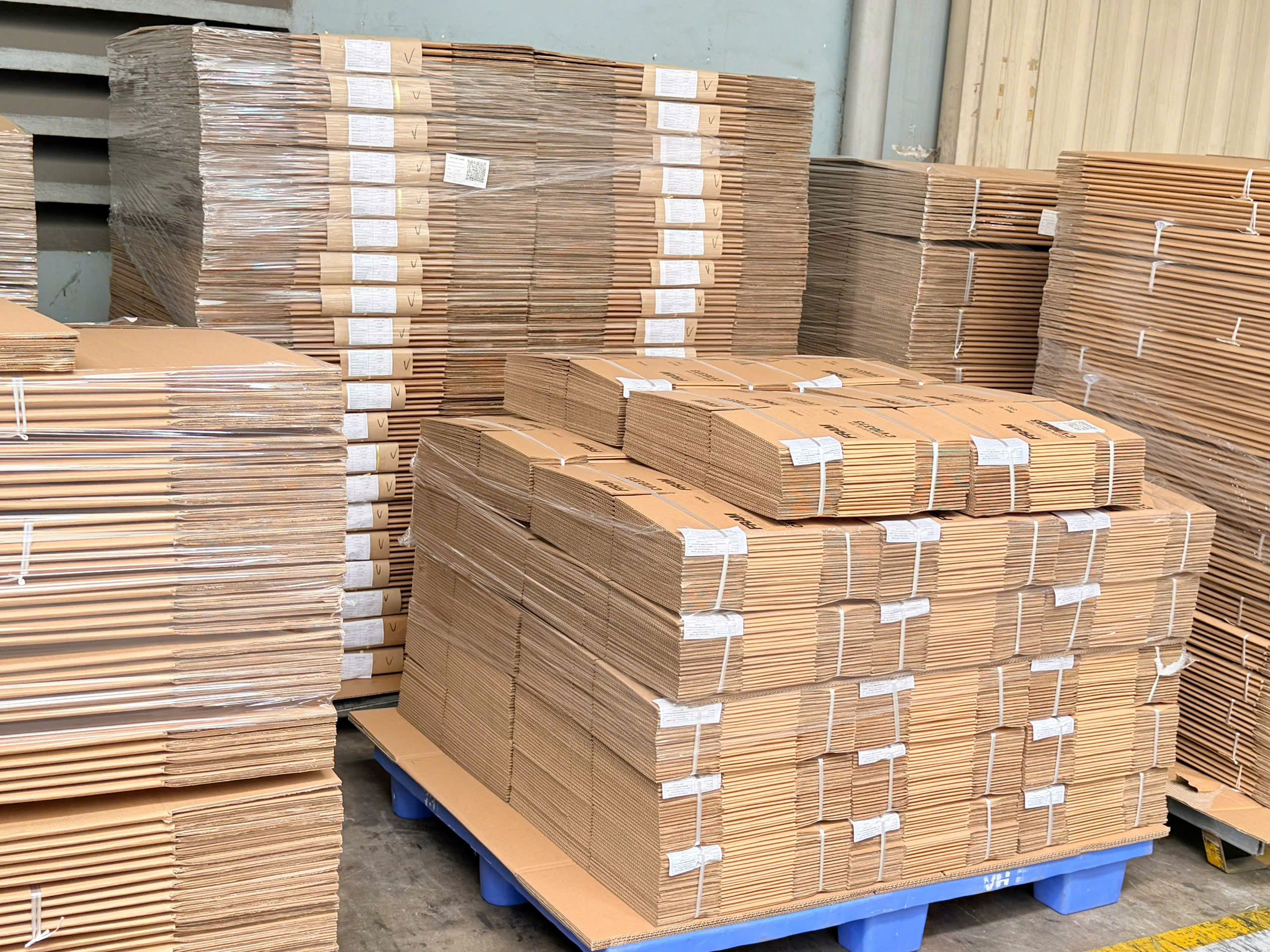
Recycling and circulating production paperboard scrap is a vital path to optimizing operational costs and executing green manufacturing audits.
1. Automated Scrap Collection and Sorting Systems
Within printing and packaging conversion plants, paper scrap originating from corrugator edge trims, die-cut window knockouts, and setup sheets is inevitable, typically averaging 8% to 12% of raw paperboard inputs. Chau Thai Son views this scrap not as industrial waste but as a circular asset:
-
Pneumatic Vacuum Shredder Waste Handling: At our slitter-scorers and automatic flatbed die-cutters, trim scraps and window cutouts are immediately captured by pneumatic air hoods, blown through overhead duct pipes, and deposited into centralized scrap cyclones.
-
Source Separation: Scraps are sorted into distinct grades: unprinted kraft liners, offset-printed Ivory boards, and rejected corrugated boards. Sorting maintains fiber purity, which is highly valued by secondary recycling mills.
2. Hydraulic Baling and Closed-Loop Recycling Logistics
-
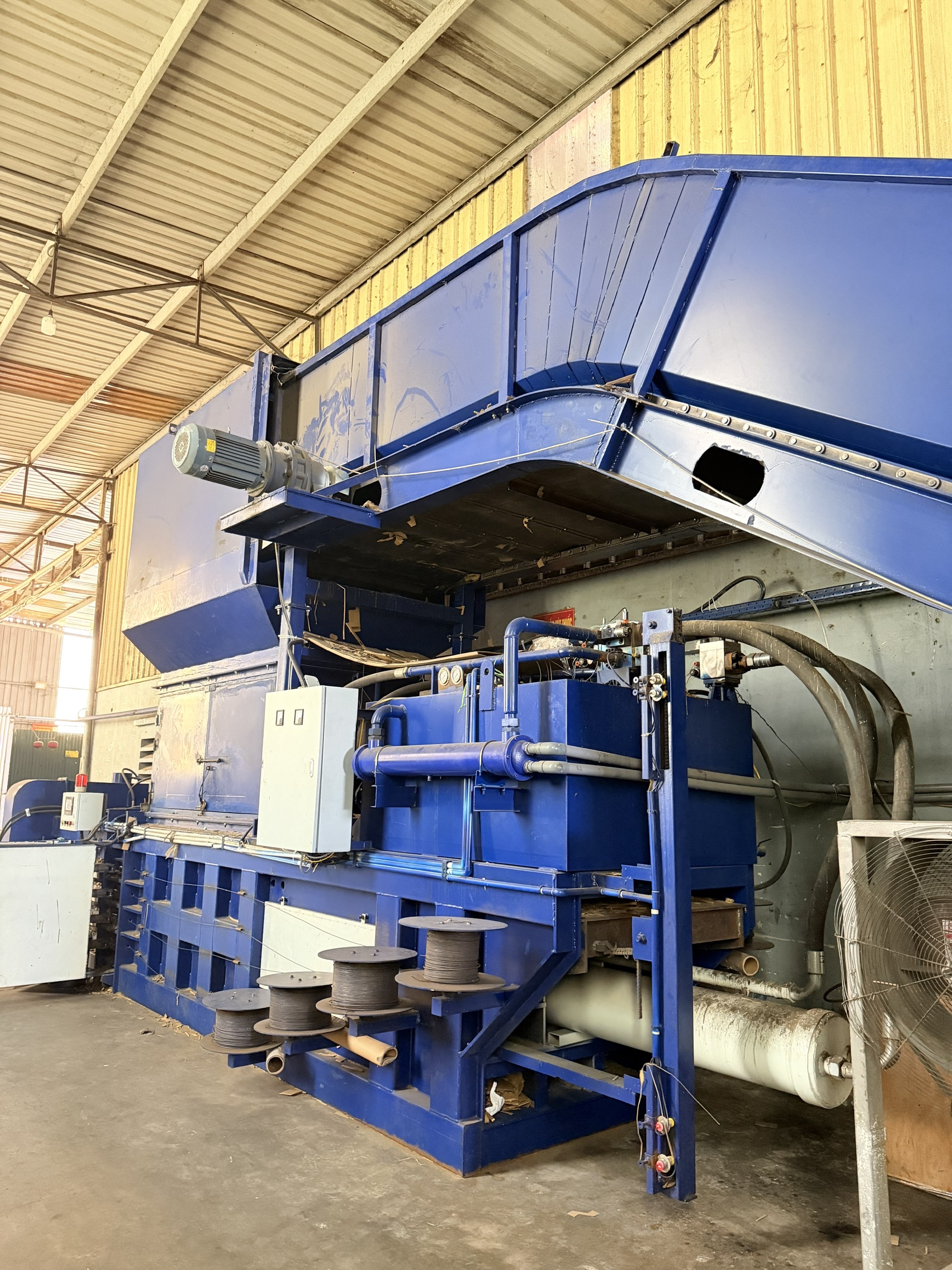
Heavy-Duty Hydraulic Balers: Centralized loose paperboard scrap is fed into heavy-duty hydraulic baling presses, which compress the fibers into dense rectangular bales weighing 500 to 800kg. Bales are wire-tied for efficient stack warehousing and forklift transport.
-
Closed-Loop Supply Partnerships: Chau Thai Son partners with global containerboard manufacturers such as Vina Kraft and Hansol. Our compressed paperboard bales are shipped back to their paper mills, pulped, and recycled into new containerboard rolls, which we purchase back for our corrugators.
3. Optimizing Sheet Layouts to Minimize Scrap Ratios
To proactively minimize waste margins at the drawing board, Chau Thai Son offers complimentary 3D structural CAD design services and offset nesting sheet layout optimization. By nested aligning box configurations on the die board, we reduce edge trim waste by up to 5%, directly lowering packaging procurement costs for B2B buyers.
---